You Ordered the Fettuccine—the Number Next to It Can Wait
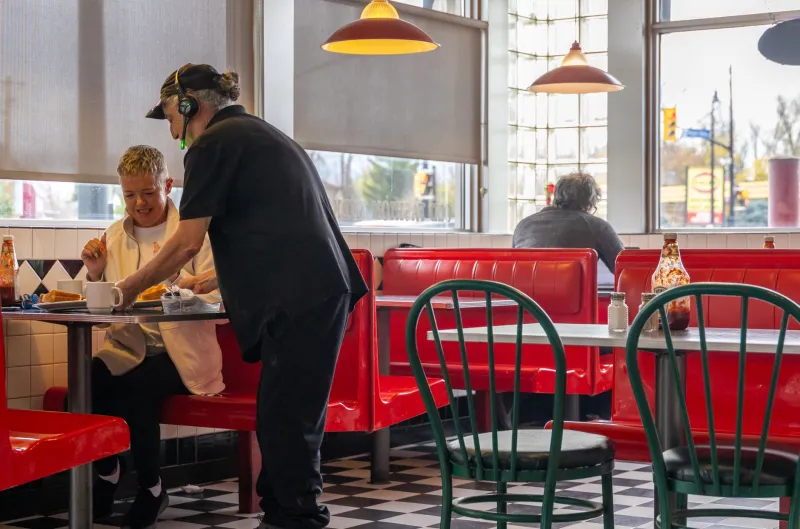
You sit down at a booth, and the menu arrives with a column of numbers running down the right side like a receipt for a purchase you haven't made yet. The fettuccine is 1,240. The salmon is 690. The burger is somewhere in between, and the salad you'd actually enjoy is higher than the salad you wouldn't. Somewhere in the back of your brain, a small calculator wakes up and starts typing.
This is dinner in America now. Since the federal menu labeling rule took effect in 2018, chains with 20 or more locations have had to post calorie info on menus and menu boards—sit-down restaurants, fast-casual counters, drive-thrus, and the pastry case at your coffee shop. It's just... there. Part of the furniture.
The question isn't whether the numbers exist. It's what you're supposed to do with them when all you wanted was dinner.
A number is information. It is not a verdict.
Here's the thing people forget: a calorie count tells you roughly how much energy is in a dish. It does not tell you whether the dish is good for you, whether it will satisfy you, whether it fits your body's needs today, or whether you're a decent person for ordering it. It's a unit of measurement, the same way "16 oz" is a unit of measurement. Nobody looks at a 16-ounce coffee and concludes something about your moral fiber.
And the numbers themselves are estimates. The Food and Drug Administration allows a fair amount of wiggle room in how they're calculated, and the line cook isn't measuring the oil with a laboratory pipette. That 1,240 is a ballpark, not a scripture.
If the numbers are useful to you, use them like this
Some people genuinely like having the data. Cool. There are ways to work with it that don't turn your entrée into a spreadsheet cell.
Compare, don't tally. If you're choosing between two things you want equally, the numbers can be a tiebreaker. That's it. One comparison, one decision, done. You don't owe anyone a running total of your day.
Look at the plate, not just the panel. A number doesn't tell you that the salmon comes with roasted vegetables and a sauce you love, or that the fries are the reason you came. Ask what the meal actually is, then weigh the number against that.
Decide what you want first, then peek. Order in your head before you scan the right column. If you still want the thing, you want the thing. The number can inform you; it doesn't get to overrule you.
Give yourself a range instead of a target. Ranges are how real eating works. A day is a range. A week is a bigger range. Bodies are not metronomes and appetites are not flat lines.
If the numbers make you spiral, you're allowed to look away
Not everyone finds the info neutral, and that's worth saying plainly. For people with a history of disordered eating, a calorie column can do real damage—turning a pleasant lunch into a negotiation, or worse. If that's you, opting out isn't avoidance. It's self-protection.
Some low-friction ways to skip the numbers entirely:
- Browse the menu online before you go, where you can scroll past the nutrition panel and land on the description of the food.
- Ask for a menu without the calorie column—plenty of sit-down chains print a version without it, or you can look at a photo menu.
- Order first. The longer you sit with everyone else's commentary, the louder the math gets.
- Pick by craving. "What sounds amazing right now?" is a complete and legitimate decision-making framework.
- Notice the pastry case problem. Coffee shops are the sneakiest version of this—the label is right at eye level, mid-craving, in a line you're stuck in. Decide before you get to the register and it's a non-event.
The whole-day math problem is a trap
Even if you like numbers, the arithmetic almost never holds. The count doesn't account for the fact that you didn't finish the rice, that you split the appetizer three ways, that you ate lunch at 2 p.m. and weren't that hungry, or that you ran five miles this morning. It doesn't know about your hunger cues, your meds, your cycle, your stress level, or the fact that you were craving salt because you've been sweating through an unseasonably warm November.
Trying to reconcile a menu number with the rest of your day is like trying to guess your exact weight from a photo. You'll generate a number. It won't mean much.
What a dinner out is for
Restaurant food is engineered to be more indulgent than what you'd make at home—more butter, more salt, more of the things that make food taste like food. That's the entire business model, and it's not a trick being played on you. It's the reason you go.
There's also company, and a night off from the dishes, and the very particular pleasure of ordering something you'd never bother to make on a Tuesday. None of that shows up on the menu. All of it counts.
So order the fettuccine. Or don't—maybe you want the salmon tonight, and that's just as fine. Either way, the number trailing after your choice is a footnote, not a headline. Put the calculator back in your bag and pass the bread.