The Board Counts: Weeknight Dinner Without a Recipe
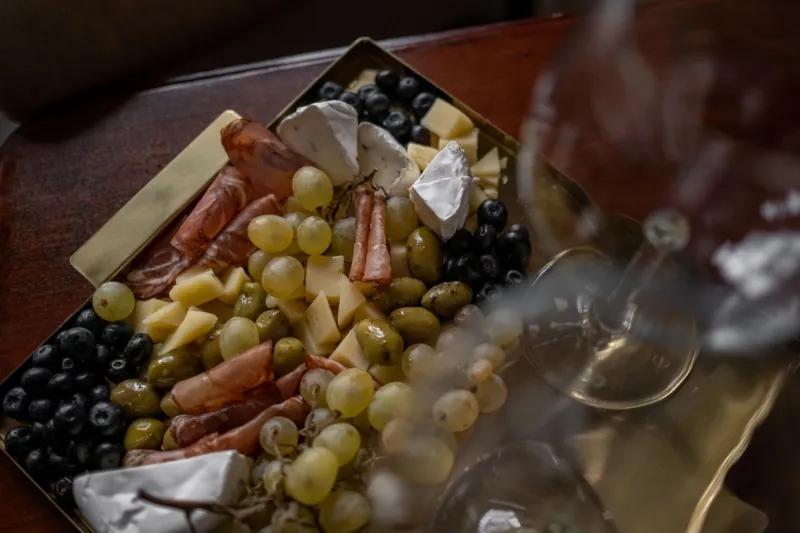
It is 6:42 on a Tuesday. You have no plan, no patience for a recipe, and no interest in turning dinner into a second job. You open the fridge, pull out a hunk of cheddar, some grapes, a jar of olives, and the loaf of bread that is one day away from being croutons. You put it all on a cutting board. Congratulations: dinner is served.
Somewhere along the way, we picked up the idea that a real dinner has to be cooked from a recipe, plated on a plate, and somehow contain a protein, a starch, and a vegetable in neat compartments. A cheese board, by that logic, is an appetizer that got too comfortable. But that logic is not a rule. It is a habit. And habits can be revised.
The recipe rule was never a health rule
There is no nutrition law that says a meal must come from a skillet to count. A collection of foods eaten together is a meal. Soup and sandwich is a meal. Cereal at midnight is a meal. A board with bread, cheese, fruit, nuts, olives, and something green is a meal—and on the right night, it is a very good one.
What makes a board work is not culinary ambition. It is variety and enoughness. You want something creamy, something salty, something fresh, something crunchy, and something that feels like a treat. That is not a compromise. That is a balanced spread in the way that matters: it gives you different textures, flavors, and degrees of pleasure in the same sitting.
Cooking is one path to dinner. Assembly is another. Neither is morally superior. The goal is to get fed, feel satisfied, and not spend your evening resentful of your own kitchen.
What actually makes a board a meal
A party board is often built to impress. A dinner board is built to feed you. Those are different jobs, and the dinner version is easier.
Start with a base: sliced bread, crackers, pita, or whatever carb you actually like. Add one or two cheeses—something sharp and something soft, or just the one you have. Bring in fruit: apple slices, grapes, pear, dried apricots, or jam. Add vegetables that do not require cooking: cucumber rounds, cherry tomatoes, snap peas, peppers, or a handful of greens on the side. Toss on olives, pickles, nuts, or seeds. Add a condiment—honey, mustard, hummus, or a little dish of olive oil.
If you are hungrier, add protein beyond cheese: rotisserie chicken, hard-boiled eggs, salami, beans, or a scoop of hummus. If you want something warm, toast the bread. If you want something sweet, add chocolate. None of these choices are a failure. They are just dinner.
Build for satisfaction, not a nutrition label
The word balanced gets used like a test you can fail. It is not. Balance is a spread, not a scorecard. Some nights your board is heavy on bread and cheese because that is what sounds good. Other nights you want more tomatoes and fewer crackers. Both can be dinner. Both can be fine.
Ask yourself two questions: Will this fill me up? Will I enjoy it? Those are more useful than tallying grams or worrying about whether the board looks like it belongs on a magazine cover.
You do not need to arrange everything in rosettes. You do not need three kinds of cheese or a fig jam drizzle. You do not need to call it a charcuterie board if that word makes you feel like you are hosting a wedding shower. Call it dinner. Put it on the table. Sit down.
Three low-effort blueprints
The Classic No-Plan Board: Cheddar, apples, crackers, almonds, olives, and a handful of baby carrots. Mustard on the side. Done.
The Warm-Weather Board: Hummus, pita, cherry tomatoes, cucumber, feta, grapes, and a few slices of deli turkey or chickpeas. Squeeze a lemon over the vegetables if you are feeling fancy.
The Clean-Out-the-Fridge Board: Leftover roasted vegetables, bread, whatever cheese is hiding in the drawer, a hard-boiled egg, pickles, and a spoonful of jam. This is not sad. This is resourceful.
The clean-up is part of the appeal
A board dinner usually means one cutting board, a few small bowls, and maybe a knife. There is no sheet pan to scrub, no sauce to reduce, no recipe to reread. That matters on a weeknight. Low-effort is not low-care. It is a way of caring for yourself by not making dinner harder than it needs to be.
If you live with other people, put the board in the middle of the table and let everyone take what they want. It is family-style without the pressure of a formal family meal. If you live alone, make a board for one. Use a small board. Add one thing you are genuinely excited about, even if it is just a good pickle.
Permission, not performance
You are allowed to eat a cheese board for dinner. You are allowed to skip the recipe. You are allowed to choose the low-effort option without calling it a cop-out or promising to make up for it tomorrow. Dinner is not a performance review. It is food, and it is yours.
So tonight, if the board is what you have the energy for, make the board. Add something green if you want. Add something crunchy. Add an extra piece of cheese if that is what satisfaction looks like. Then sit down and eat. That counts.