Pie Is Not a Performance Review: How to Enjoy Holiday Sweets Without the Scorekeeping
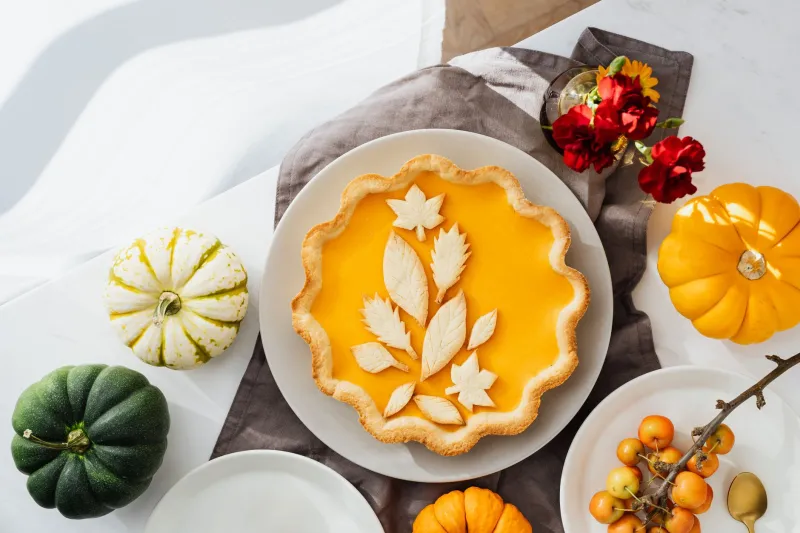
There’s a moment at a lot of holiday tables when dessert stops being dessert and starts being a referendum. Someone asks whether you’ve been 'good.' Someone else announces they’re 'being bad' while reaching for pecan pie. A third person says they’re 'saving room,' even though they’ve been saving room since Halloween.
At Lusty Diets, we’re not here for that. Pie is pie. Your plate is not a report card. And Thanksgiving 2026 does not need a calorie audit at the end of the table.
Why calling desserts 'bad' backfires
Moral labels feel harmless—'bad' dessert, 'clean' plate, 'guilty' pleasure—but they tend to make food louder, not quieter. When a food gets stamped as forbidden, it can start to feel more exciting, more urgent, and more difficult to eat with any kind of ease. You may find yourself avoiding it until you’re around it, then eating past comfortable fullness because the window is closing. Or you may eat it in secret and skip the part where you actually taste it.
Shame is not a great nutrition coach. It’s distracting. It pulls attention away from hunger, fullness, flavor, and whether you’re even enjoying what’s on your fork. A body-positive approach doesn’t mean every food is nutritionally identical. It means you stop pretending dessert has to earn its place through punishment.
Satisfaction is part of the bigger picture. A holiday meal that leaves you feeling satisfied—not stuffed, not deprived, not sneaking bites in the kitchen—is often a meal you can move on from more easily. That’s not a lack of discipline. That’s trust.
The calorie math can stay in the spreadsheet
Holiday dessert math is famously bad math. You don’t know exactly what went into Aunt’s pie, you don’t know how your body is using it today, and you definitely don’t know what your plate needs to look like next Tuesday. Trying to pre-negotiate every bite turns dessert into a transaction.
Instead, try pairing the sweet thing with satisfaction. That might mean having pie after dinner rather than instead of dinner, adding whipped cream because you like whipped cream, or choosing the dessert you actually want instead of the one you think you should want. It might mean taking a smaller first slice so you can decide whether you want more. It might mean sitting down, putting your phone away, and noticing the first three bites—the ones that usually carry the most pleasure.
Practical pairing doesn’t have to mean a protein bar next to a brownie. It can mean a slice of apple crumble with a spoonful of Greek yogurt, a cookie with a glass of milk, or a piece of fudge alongside a handful of nuts. The point isn’t to dilute the dessert. The point is to make the snack or meal feel complete enough that you’re not chasing the next bite for closure.
Scripts for the family comments
Comments about seconds, portions, or 'being good' are usually not really about you. They’re often just holiday-table noise—old scripts, nervous energy, or someone’s own food rules leaking out. You don’t owe anyone a full explanation.
Some low-drama responses:
- 'I’m having the pie. It’s Thanksgiving.'
- 'I’m good for now—I’ll make another plate if I’m hungry later.'
- 'I’d rather hear about your garden than my plate.'
- 'Thanks for caring. I’m listening to my body tonight.'
- 'Comments about my plate aren’t on the menu. Tell me about that trip you’re planning.'
If someone pushes, you can repeat the same sentence in the same calm tone. You do not have to justify seconds, decline seconds, or perform a wellness routine at the dessert table. 'No, thank you' and 'Yes, please' are both complete sentences.
Build a dessert table you can actually enjoy
Before you pile a plate, take a slow look at the table. What looks genuinely good? What are you choosing because it’s tradition? What are you choosing because someone will be offended if you don’t? Those are different questions, and they’re allowed to have different answers.
Then take the first serving that feels right, sit down, and taste it. If you want more, go back. If you don’t, stop. Seconds are not evidence of failure, and passing on seconds is not evidence of virtue. They’re just choices.
The holiday season is full of food that only shows up once a year. You don’t have to make every dessert count for the entire year, and you also don’t have to skip the ones you love to prove you’re in control. You’re allowed to enjoy pumpkin pie, pecan pie, cookies, or nothing at all. Your plate is not a report card. It’s just a plate.